 English
 عربي
عربي
Get the Latest Updates!

.svg)

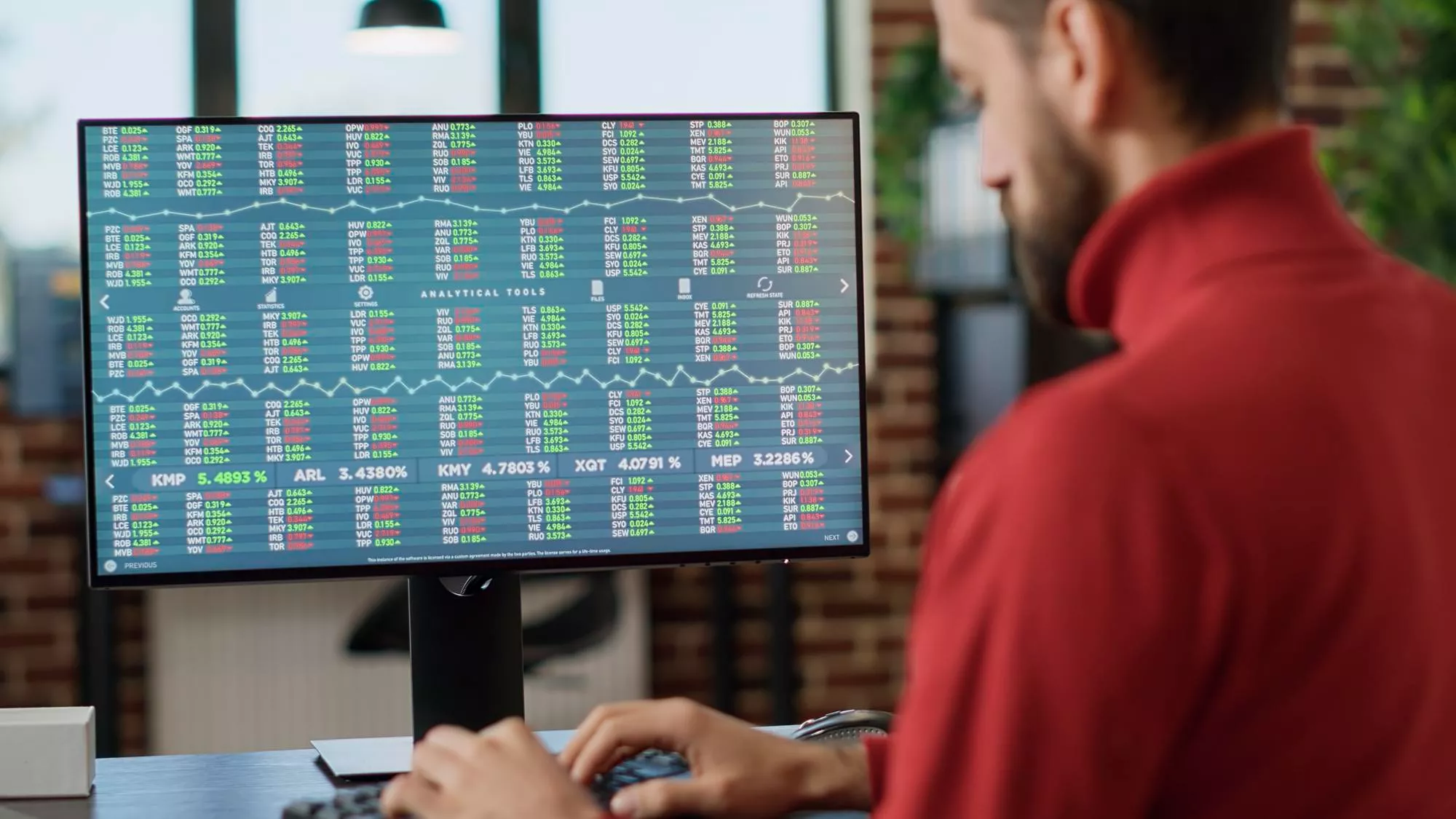

Leverage is the most powerful — and most misunderstood — concept in forex trading. Brokers advertise ratios like 1:500 or 1:1000, and beginners often think higher leverage means bigger profits. In reality, leverage is a double-edged sword: it multiplies both your gains and your losses by exactly the same factor.
This guide explains exactly what leverage is, how to calculate it, what level professional traders actually use, and the one rule that separates traders who survive from those who blow their accounts within weeks.
What is Leverage in Forex?
Leverage allows you to control a large position in the market with a relatively small amount of capital. Your broker effectively lends you the difference. If your broker offers 1:100 leverage, it means for every $1 of your own money, you can control $100 in the market.
- Leverage of 1:100 → $1,000 account controls $100,000 in trades
- Leverage of 1:200 → $1,000 account controls $200,000 in trades
- Leverage of 1:500 → $1,000 account controls $500,000 in trades
The amount your broker holds as collateral to open a leveraged position is called the margin. Leverage and margin are two sides of the same coin — understanding one means understanding the other.
How to Calculate Leverage
Effective Leverage = Notional Trade Value ÷ Account Balance
Required Margin = Notional Value ÷ Leverage Ratio
Example: You have a $2,000 account and open 1 standard lot of EUR/USD at 1.08500. The notional value is $108,500. Your effective leverage is 108,500 ÷ 2,000 = 54.25:1. This is the number that actually matters — not the maximum leverage your broker offers.
Margin Required at Different Leverage Levels (1 Standard Lot EUR/USD @ 1.08500)
| Leverage | Notional Value | Margin Required | Margin % |
|---|---|---|---|
| 1:10 | $108,500 | $10,850 | 10% |
| 1:50 | $108,500 | $2,170 | 2% |
| 1:100 | $108,500 | $1,085 | 1% |
| 1:200 | $108,500 | $542 | 0.5% |
| 1:500 | $108,500 | $217 | 0.2% |
| 1:1000 | $108,500 | $108 | 0.1% |
Leverage Amplifies Both Profits AND Losses
This is the part most beginners ignore until it's too late. Leverage does not care whether the trade goes in your favour or against you — it amplifies the outcome either way by the same factor.
EUR/USD — 50 pip move, $1,000 account, 0.10 lot
| Scenario | Pip Move | P&L (0.10 lot) | % of Account |
|---|---|---|---|
| Trade goes your way | +50 pips | +$50.00 | +5% |
| Trade goes against you | −50 pips | −$50.00 | −5% |
| No stop loss, large move | −200 pips | −$200.00 | −20% |
A 200-pip move against an unprotected 0.10 lot position on a $1,000 account wipes out 20% of capital in a single trade. Scale that to 1.00 standard lot and the same move erases the entire account — and more.
Calculate Your Margin & Effective Leverage — Free
Use our free Leverage & Margin Calculator to find exactly how much margin you need and your real exposure — before placing any trade.
Open Leverage Calculator →What Leverage Do Professional Traders Actually Use?
Here is the truth that most brokers won't tell you: professional traders rarely use more than 5:1 to 10:1 effective leverage, even if their broker offers 1:500. The maximum leverage offered is a tool for liquidity — not an invitation to use it all.
- Retail beginners: Often use 50:1 to 200:1 effective leverage → high account blow-up rate
- Experienced retail traders: Typically 5:1 to 20:1 effective leverage
- Professional hedge funds: Rarely exceed 3:1 to 5:1 effective leverage
- Prop firm traders: Usually limited to 10:1 by firm risk rules
The simple rule: keep effective leverage below 10:1. This means on a $1,000 account, total open position notional value should never exceed $10,000 — roughly 0.10 lot of EUR/USD at current prices.
Leverage Across Different Instruments
Different instruments carry very different volatility and contract sizes — which means the same lot size can represent vastly different risk levels depending on what you're trading.
| Instrument | 1 Lot Contract | Approx. Notional (2026) | Daily Avg Move | Daily $ Risk (0.10 lot) |
|---|---|---|---|---|
| EUR/USD | 100,000 EUR | ~$108,500 | ~70 pips | ~$70 |
| GBP/USD | 100,000 GBP | ~$126,000 | ~100 pips | ~$100 |
| USD/JPY | 100,000 USD | ~$100,000 | ~80 pips | ~$73 |
| XAU/USD (Gold) | 100 oz | ~$308,000 | ~$25/oz | ~$250 |
| NAS100 | per index pt | ~$19,500 | ~150 pts | ~$150 |
| US30 | per index pt | ~$38,500 | ~200 pts | ~$200 |
Approximate values based on 2026 market levels. Always verify current prices before trading.
Notice that gold and US indices carry significantly higher daily dollar risk per lot than standard forex pairs. A beginner who treats 0.10 lot of gold the same as 0.10 lot of EUR/USD is unknowingly taking on 3–4× more daily exposure.
Leverage Regulations by Region
Financial regulators around the world cap the maximum leverage brokers can offer retail clients. If you are offered leverage higher than these limits, your broker is likely operating offshore without local regulation.
| Region | Regulator | Max Leverage (Forex Majors) | Max Leverage (Indices/Gold) |
|---|---|---|---|
| European Union | ESMA / CNMV / BaFin | 1:30 | 1:20 |
| United Kingdom | FCA | 1:30 | 1:20 |
| Australia | ASIC | 1:30 | 1:20 |
| United States | CFTC / NFA | 1:50 | 1:20 |
| Middle East (DIFC) | DFSA | 1:50 | 1:20 |
| Offshore brokers | FSC / VFSC etc. | Up to 1:1000 | Up to 1:500 |
The Golden Rule of Leverage
"The maximum leverage your broker offers is not the leverage you should use. Treat leverage like a scalpel, not a sledgehammer. Use only what your risk management model requires — nothing more."
Every trade should start with a maximum risk amount (1–2% of your account), a stop loss level based on chart analysis, and a lot size calculated to keep risk within that limit. The leverage your broker allows is irrelevant to this process. Use our free calculators below to implement this discipline on every trade.
16 Free Trading Calculators — All in One Place
From pip value to lot size, margin, risk, drawdown and more — every calculator you need to trade with precision, completely free.
View All Free Calculators →Frequently Asked Questions
Is 1:500 leverage dangerous?
It can be, but only if you actually use it at full capacity. A broker offering 1:500 doesn't mean you must open positions worth 500× your balance. Used correctly with proper position sizing, any leverage level is manageable. The danger is psychological — high leverage makes it tempting to over-size positions.
What happens if a leveraged trade goes to zero?
If your account equity falls below the broker's margin requirement, you receive a margin call. If it falls to the stop-out level (typically 20–50% of required margin), the broker automatically closes your positions. With most regulated brokers, you cannot lose more than your deposited balance due to negative balance protection.
What is the best leverage for a beginner?
For beginners, effective leverage of 5:1 to 10:1 is safest. In practice this means: on a $500 account, never open more than $2,500–$5,000 in total position notional value. That corresponds to roughly 0.02–0.05 lot of EUR/USD. Focus on learning first — leverage can always be increased as skills improve.
Does leverage affect swap fees?
No. Swap fees are calculated on the notional value of the position (the full contract size), regardless of how much leverage was used to open it. A 1 standard lot position always incurs the same swap charge whether you used 1:10 or 1:500 to open it.


Subscribe to our newsletter!
Do you freelance or work at a digital agency? Are you planning out your NCC agenda?

Explore
Related posts.

%20(3).png)
.svg)
New2Money is a free financial education platform covering marketsand real-time news to help you make smarter financial decisions.
Saudi Arabia